
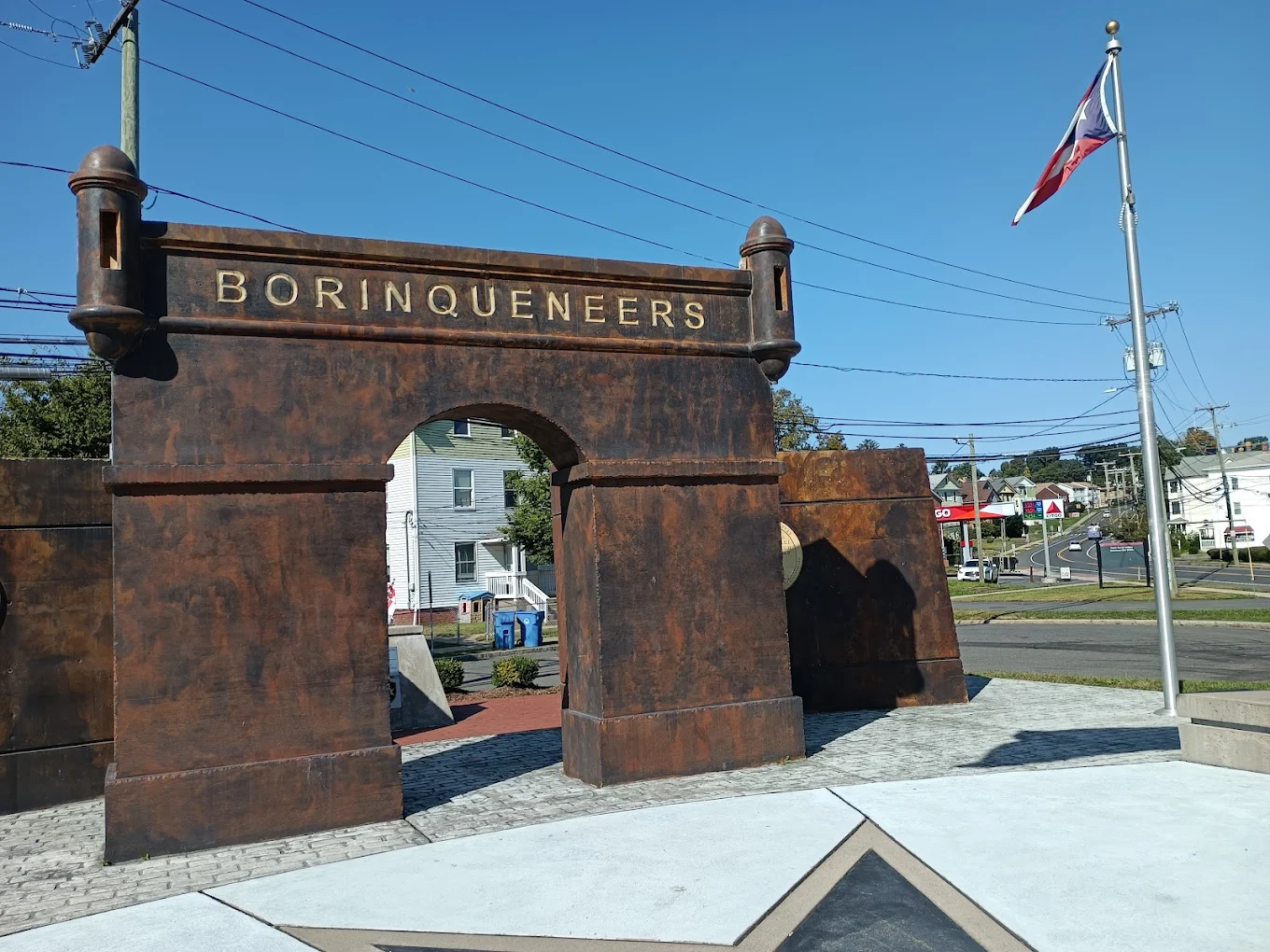
NEW BRITAIN, Conn. — April 14, 2026 — Community members, veterans, and public officials gathered this week at New Britain’s Borinqueneers Monument to honor the legacy of the 65th Infantry Regiment—an all‑Puerto Rican unit of the U.S. Army—during the fifth annual National Borinqueneers Day. The observance, held each year on April 13, recognizes the regiment’s service dating back to 1899 and its perseverance through segregation, discrimination, and battlefield adversity.
The ceremony opened with the national anthems of both the United States and Puerto Rico, led by New Britain Mayor Bobby Sanchez, the city’s first Boricua mayor. U.S. Sen. Richard Blumenthal emphasized the long-overdue recognition of the regiment, comparing their struggle for acknowledgment to that of other historically segregated military units. “It took a long time to recognize the Borinqueneers, just as it did the Tuskegee Airmen, the Montford Point Marines and the Navajo Code Talkers,” Blumenthal said, noting the importance of honoring both veterans and their families.
Retired U.S. Army First Sergeant Juan Cruz, founding president of the Hispanic-American Veterans of Connecticut, highlighted the stories of Connecticut residents who served in the regiment. He recognized surviving veterans—now in their 90s—who were unable to attend due to health concerns, as well as many who have passed. Cruz underscored the challenges the soldiers faced, including language barriers and segregation, and how their perseverance paved the way for greater inclusion in the U.S. Armed Forces. “Despite the challenges — with language barriers, discrimination and the challenges of segregation — these soldiers never faltered in their duty,” Cruz said. “Their perseverance not only continued the success of military operations, but it also paved the way for people like me, for greater recognition and inclusion within the U.S. Armed Forces.”
The event took place at the city’s Borinqueneers Monument, designed by local resident Jorel Moret and inspired by El Morro, the iconic military fort in Old San Juan. Moret said the project helped many families uncover their own connections to the regiment. The monument also appears on a Connecticut specialty license plate designed by Moret, with proceeds supporting bilingual services for Latino veterans through Cruz’s organization.
This year’s observance also marked the 10th anniversary of the regiment receiving the Congressional Gold Medal, one of the nation’s highest civilian honors. The recognition commemorated the Borinqueneers’ service in World War I, World War II, and the Korean War, as well as their resilience during the military’s segregation era.
Speakers and attendees emphasized that National Borinqueneers Day is not only a celebration of military service but also a reaffirmation of Puerto Rican heritage in Connecticut—home to one of the largest Boricua communities in the mainland United States. As families gathered at the monument, many reflected on the importance of preserving the stories of the Borinqueneers for future generations.