
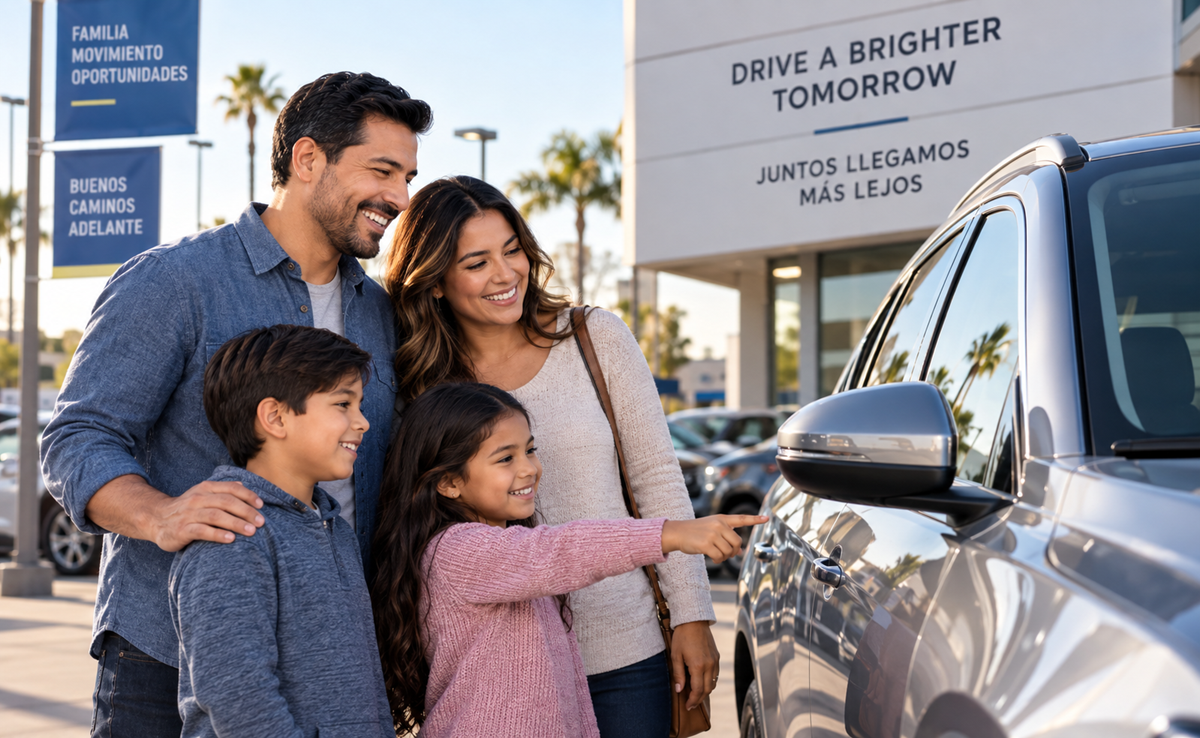
September through the end of the year has traditionally been an important period for the automotive industry, as manufacturers introduce new models and compete for consumers preparing for their next vehicle purchase. One thing has changed dramatically since this article was originally published: the economic influence of Latino consumers in the United States is considerably larger.
The U.S. Hispanic population reached approximately 68 million people in 2024, representing about 20% of the nation’s population, according to the U.S. Census Bureau. Hispanics are now the country’s largest racial or ethnic minority, making Latino consumers increasingly important to industries ranging from housing and financial services to retail and automobiles.
That demographic growth has been accompanied by remarkable economic growth. According to the 2025 Official U.S. Latino GDP Report, produced by the Latino Donor Collaborative in collaboration with Arizona State University’s W. P. Carey School of Business, U.S. Latino economic output reached approximately $4 trillion, while Latino purchasing power reached an estimated $4.1 trillion. By comparison, research from the University of Georgia’s Selig Center estimated Hispanic buying power at approximately $1.9 trillion in 2020 and just $213 billion in 1990.
Latino Consumers and the Automotive Market
Automobiles remain an important part of household spending. According to the U.S. Bureau of Labor Statistics’ Consumer Expenditure Survey, Hispanic households averaged approximately $5,166 in annual net vehicle-purchase expenditures in 2024, including spending associated with new and used cars and trucks.
The same data show average Hispanic household expenditures of approximately $2,076 on new vehicle purchases and $3,084 on used vehicle purchases during 2024. These figures are household expenditure averages—not the percentage of vehicles purchased by Hispanics—but they illustrate the continuing importance of automobiles within the Latino consumer economy.
The broader U.S. automotive market is also evolving. S&P Global Mobility analyzed more than 13.1 million new retail vehicle registrations in 2024 and found that brand loyalty across the market has been recovering, although it remained below pre-pandemic levels. That environment creates both an opportunity and a challenge for automakers seeking to build long-term relationships with Latino buyers rather than simply assuming traditional brand loyalties will continue.
A Market Automakers Can No Longer Treat as Secondary
Today’s Hispanic automotive consumer is part of a younger, growing and increasingly economically influential population. That means manufacturers, dealerships, lenders, insurers and other businesses serving vehicle owners have strong reasons to understand Latino consumers on their own terms.
Buying the vehicle is also only one part of the ownership decision. Finding the right auto insurance (seguros de auto en español) is another important consideration for Latino drivers and families, particularly when comparing the overall cost of owning and protecting a vehicle. Providing clear information and customer service in Spanish can make that process easier for consumers who prefer to research financial and insurance decisions in their primary language.
For automakers, the opportunity extends beyond translating an advertising campaign into Spanish. Reaching Hispanic consumers effectively increasingly requires understanding differences in language preference, culture, geography, household characteristics and purchasing behavior.
The Latino automotive market that once attracted attention because of its growth potential has matured into something much bigger: a significant part of the mainstream U.S. consumer economy. With roughly one in five Americans now Hispanic and Latino purchasing power measured in the trillions of dollars, brands competing for the next generation of American car buyers have every reason to pay attention.